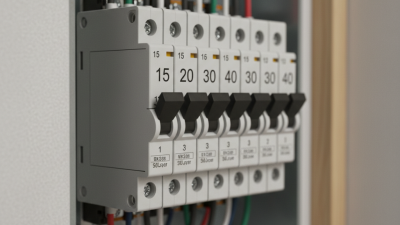
Getting a good grip on what the interrupting rating of a Circuit Breaker is really important when it comes to safety and making sure everything runs smoothly. A lot of folks in the industry often ask, “What exactly is the interrupting rating of a circuit breaker?” Well, it’s basically the maximum amount of fault current that breaker can handle and shut off safely without failing — ignoring that could lead to big trouble. Knowing this stuff well can actually help you avoid some pretty disastrous failures down the line.
Picking the right Circuit Breaker isn’t just a shot in the dark; you gotta look at the interrupting rating. If you go too low, you risk serious damage or, worse, safety hazards. This is especially true in industrial setups, where the potential fault currents are often much higher. And let’s be honest, every circuit is different, which can make choosing the right breaker a bit tricky.
Of course, a breaker with a higher interrupting rating gives better protection—no question—but it might also cost more. So, it’s all about finding that sweet spot between performance and budget. The best move? Do your homework. Talking to experts or checking with manufacturers can really give you a leg up. Always, and I mean always, take a close look at the specs and make sure it matches what you need, especially for critical jobs. Trust me, thorough research pays off in the long run!

Understanding Circuit Breakers and Their Functionality
Circuit breakers play a crucial role in modern electrical systems. They protect circuits from overloads and short circuits. Studies have shown that the failure rate of electrical systems can be significantly reduced with properly rated circuit breakers. According to the National Electrical Manufacturers Association, about 80% of electrical fires are caused by faulty or inadequate protective devices. This emphasizes the urgency of understanding their functionality.
The interrupting rating of a circuit breaker indicates its ability to halt electrical flow during a fault. Selecting a breaker with an appropriate rating prevents severe damage and ensures safety. Data reveals that over 30% of industrial facilities do not use circuit breakers that match their system’s needs, exposing them to unnecessary risks. The European Committee for Electrotechnical Standardization highlights that inadequate ratings can lead to catastrophic failures.
It's important to note that the installation and maintenance of circuit breakers often reflect the quality of electrical management in a facility. Improperly installed circuit breakers may not function as intended. Regular checks and assessments ensure they operate effectively. Awareness of these elements is key in achieving a reliable electrical infrastructure.
What is Interrupting Rating in Circuit Breakers?
The interrupting rating in circuit breakers is a crucial aspect of electrical safety. It defines the maximum fault current a circuit breaker can safely interrupt without failure. Understanding this rating helps in selecting suitable circuit breakers for various applications. According to the National Electrical Manufacturers Association (NEMA), circuit breakers must meet specific standards, typically with ratings ranging from 5 kA to over 200 kA, depending on the system's needs.
Furthermore, the testing process for these ratings is rigorous. Manufacturers conduct extensive tests to ensure reliability. Many circuit breakers undergo short-circuit testing to simulate real-world fault conditions. The results dictate not only the interrupting capacity but also impact the breaker’s lifespan. A high interrupting rating is vital for commercial settings where large machinery operates. Inadequate ratings can lead to inadequate protection, risking equipment and personnel safety.
In operational environments, it's vital to regularly review the interrupting ratings of circuit breakers. Changes in the electrical system, such as increased loads or equipment upgrades, can alter fault current levels. Not all existing circuit breakers may suffice under new conditions. Therefore, ongoing assessment is a key aspect of maintaining a safe and efficient Circuit Breaker Circuit. This ensures that all components meet the necessary specifications to handle potential fault conditions effectively.
Importance of Interrupting Rating for Safety and Performance
The interrupting rating of a circuit breaker is crucial for safety. It determines how much fault current a breaker can handle without failing. If a breaker with a low interrupting rating encounters a high fault current, it may not protect the circuit effectively. This can lead to damage or even fire hazards in the electrical system.
When evaluating a Double-Breaker Moulded Case Circuit Breaker, check its interrupting rating. A higher rating indicates greater safety and reliability. Inadequate ratings can pose serious risks in residential or industrial settings. Higher ratings may not always be necessary, depending on the specific application. This requires careful assessment of typical load conditions and potential fault scenarios.
Relying solely on manufacturer specifications can be misleading. Real-world conditions often differ from testing environments. Users should consult with electrical engineers for tailored advice. Ensuring that a circuit breaker meets required safety standards is vital for long-term performance. Always reflect on the specific needs of your electrical system. Proper evaluation can prevent costly mistakes and improve overall safety.
2026 Best Circuit Breaker Interrupting Ratings
This chart illustrates the importance of interrupting ratings for ensuring safety and performance in electrical systems.
Factors Influencing Interrupting Ratings in Circuit Breakers
Understanding the factors that influence interrupting ratings in circuit breakers is essential for safety and reliability. Interrupting rating refers to the maximum fault current a circuit breaker can handle without failure. Industry data highlights that circuit breakers are crucial in safeguarding electrical systems from overloads and short circuits. A standard interrupting rating might range from 5 kA to over 100 kA, depending on the application and environment.
One key factor impacting interrupting ratings is system voltage. Higher voltages can lead to increased arc energy during a fault, requiring breakers with higher ratings for safe operation. Additionally, environmental conditions also matter. Factors like temperature, humidity, and altitude can affect the performance of circuit breakers. According to a report by the National Fire Protection Association, about 30% of electrical failures occur in environments with insufficient ratings for local conditions.
Another consideration is the duration of faults. Short-circuit events can last from milliseconds to seconds. Circuit breakers must be designed to interrupt these currents within a short time to prevent equipment damage. Studies indicate that improper selection of interrupting ratings can lead to equipment failure, costing companies substantial repair expenses. This illustrates the importance of thorough assessment and expert evaluation in selecting the correct rating for specific applications.
Comparing Different Types of Circuit Breakers and Their Ratings
Understanding the different types of circuit breakers is essential for ensuring safety in electrical systems. Each type has a specific interrupting rating, which indicates its capacity to halt electrical faults. This rating helps determine which breaker suits particular applications. For example, a China Double-Breaker Moulded Case Circuit Breaker is known for its reliability under various conditions.
Circuit breakers can vary significantly. Thermal magnetic breakers use a bimetallic strip to detect overloads and magnetic forces for short circuits. Meanwhile, electronic breakers provide more precise protection with adjustable settings. The choice between these types can affect performance and safety. Yet, there's no one-size-fits-all solution. Some users might find specific breakers insufficient for handling unexpected surges.
In real-world applications, it’s crucial to match the right breaker to the load it protects. Overrated breakers may fail to trip during overloads, creating hazards. Conversely, underrated breakers might trip too frequently, frustrating end users. Understanding the nuances of circuit breaker ratings requires experience and expertise. Always consult professionals when unsure, as they can guide appropriate breaker selections tailored to your needs.
Regulatory Standards Impacting Circuit Breaker Ratings
Understanding the regulatory standards that influence circuit breaker interrupting ratings is crucial for safety and compliance. Circuit breakers are essential components in electrical systems, protecting against overloads and short circuits. Regulatory bodies set specific standards to ensure that these devices can handle fault currents effectively. These standards vary by region and are periodically updated.
Testing methods are rigorous. They assess how well a circuit breaker can withstand sudden surges in electricity. Compliance with standards like IEEE and IEC is mandatory in many countries. Such regulations help prevent equipment failure and electrical hazards. However, understanding these standards can be challenging. It's not uncommon for manufacturers to misinterpret guidelines, leading to unsafe designs.
Focusing solely on ratings may lead to oversights in other important areas. For instance, installation practices and maintenance are equally vital for system safety. Regular maintenance checks are often neglected, which can undermine the effectiveness of even the best circuit breakers. Reflecting on these aspects reveals that ratings are only one part of a larger safety puzzle.
Future Trends and Innovations in Circuit Breaker Technology
The future of circuit breaker technology is dynamic and promising. As energy demands rise, innovations are critical. According to a recent industry report, the global market for circuit breakers is projected to grow by 6.5% annually, reaching $22 billion by 2026. This growth is driven by advancements in smart grid technology and renewable energy integration.
One significant trend is the adoption of digital circuit breakers. These devices enhance monitoring capabilities and improve reliability. They provide real-time data analytics, reducing maintenance costs by up to 30%. However, the complexity of these systems raises questions about cybersecurity and potential vulnerabilities. Addressing these issues demands constant innovation and vigilance from manufacturers.
Another key area is the increase in interrupting ratings. As renewable sources like solar and wind gain traction, circuit breakers must adapt. New designs are being developed to handle higher fault currents. The need for these upgrades often exceeds budget constraints, leaving many companies reassessing their energy strategies. The industry may face a challenge in balancing performance with affordability as these technologies evolve.
2026 Best Circuit Breaker Interrupting Rating Explained
| Voltage Rating (kV) | Interrupting Rating (kA) | Application Type | Technology Type | Future Trends |
| 0.69 - 7.2 | 10 - 20 | Commercial & Industrial | Vacuum | Increased data integration |
| 7.2 - 15 | 25 - 40 | Utility | Air-insulated | Smart-grid capabilities |
| 15 - 36 | 25 - 63 | Industrial | SF6 | Eco-friendly innovations |
| 36 - 145 | 40 - 80 | Heavy Industry | Hybrid | Digital management systems |
| Above 145 | 80+ | Utility & Special Applications | Smart Circuit Breakers | AI-driven performance analytics |
Comprehensive Overview of the ARM3E Series Adjustable Molded Case Circuit Breakers: Features, Applications, and Benefits
The ARM3E Series Adjustable Molded Case Circuit Breakers represent a significant advancement in electrical protection technology, offering versatile options tailored to various industrial applications. With a range of rated currents from 63A to 250A, these circuit breakers are designed to accommodate a variety of load requirements, making them suitable for diverse settings including manufacturing facilities, commercial buildings, and data centers. Each unit is available in both three-pole and four-pole configurations, providing flexibility in circuit design and installation.
In addition to their adjustable features, the ARM3E series boasts impressive rated working voltages of 400V to 690V. This capacity allows them to operate efficiently across different voltage levels while ensuring safety and reliability. The robust construction of these circuit breakers ensures they withstand demanding environments, protecting electrical systems from overload and short-circuit conditions. As a result, the ARM3E series not only enhances operational efficiency but also promotes longevity in electrical installations, making it an invaluable asset for maintenance and cost-effectiveness in electrical management.
FAQS
: The interrupting rating is the maximum fault current a circuit breaker can safely interrupt without failure.
It helps in selecting suitable circuit breakers, ensuring safety in diverse electrical applications.
Ratings usually range from 5 kA to over 200 kA, depending on the application and system requirements.
They conduct extensive short-circuit tests to simulate fault conditions and verify reliability.
System voltage, environmental conditions, and fault duration all impact the necessary interrupting capacity.
Changes in loads or equipment may require different ratings to ensure effective protection against faults.
Temperature, humidity, and altitude can alter circuit breaker capabilities and affect safety.
Yes, these standards ensure that circuit breakers can effectively handle fault currents.
Misinterpretation of guidelines can lead to unsafe circuit breaker designs and installation issues.
Regular maintenance is crucial; ignoring it can compromise even the highest-rated breakers.
Conclusion
The article "2026 Best Circuit Breaker Interrupting Rating Explained" provides a comprehensive overview of circuit breakers, focusing on their functionality and safety. One key aspect discussed is "what is the interrupting rating of a circuit breaker," which refers to the maximum fault current the breaker can safely interrupt without causing damage or failure. Understanding this rating is crucial for ensuring electrical safety and performance, as it influences a circuit breaker's capability to protect electrical systems during overloads or short circuits.
Additionally, the article explores various factors that affect interrupting ratings, such as environmental conditions and device specifications. It compares different types of circuit breakers and their respective ratings, highlighting how regulatory standards shape these ratings. With an eye on future trends, the piece also looks at innovations in circuit breaker technology that promise enhanced safety and efficiency, ensuring that users are well-informed about their choices and the importance of proper ratings in electrical designs.

 Your Solutions For Electric Distribution
 Electronic MCCB
 400V/690V ACB
 Thermal magnetic MCCB
 Your Solutions For Solar System
 Your Solutions For MCCB Manufacturing